Customer reviews
Context #
Customer trust is the foundation of any marketplace, and when I took on the reviews project at Groupon it was immediately clear that trust signals weren’t working as hard as they needed to. People redeemed vouchers every day, yet only a small fraction shared their experiences afterward. That gap weakened credibility for new customers and left merchants without the insights needed to strengthen their offerings.
Approach #
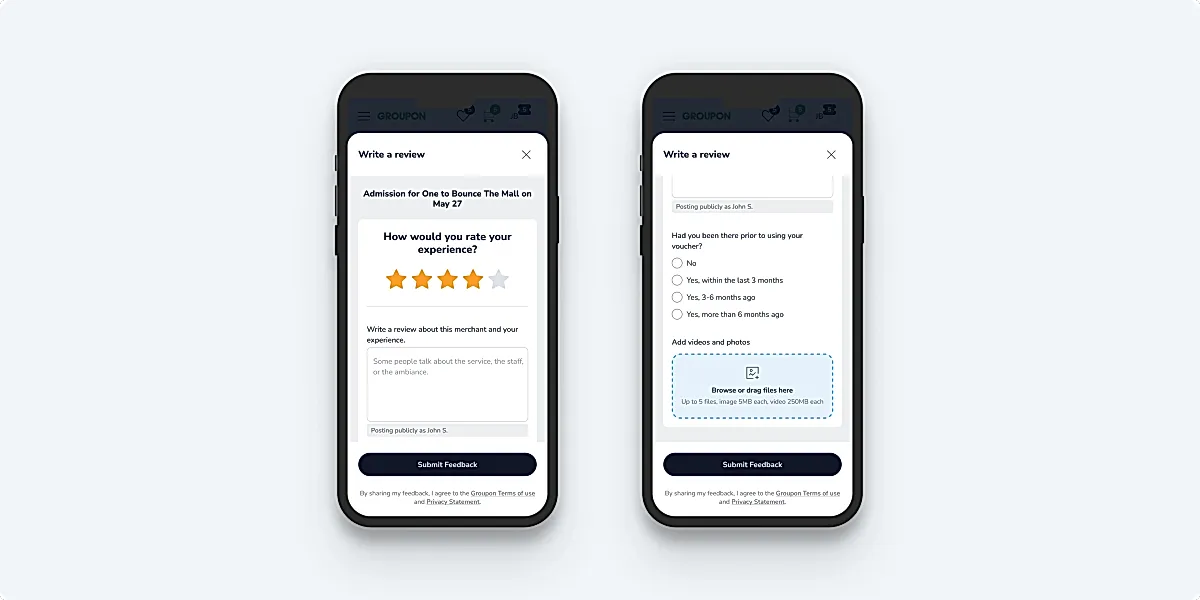
The real issue wasn’t willingness. It was the experience itself. Leaving a review required too much effort, the prompts weren’t compelling, and the flow didn’t match how people naturally wanted to share feedback.
I approached this as a system problem, not a UI problem.
First of all, it was necessary to map the full review lifecycle, uncover friction points that had built up over time, and bring cross-functional teams together around a shared understanding of what a modern, trustworthy review ecosystem should look like. From shaping the core interaction model to aligning with the design system and evolving photo-upload patterns, I rebuilt the experience so that contributing feedback felt intuitive rather than burdensome.
Outcome #
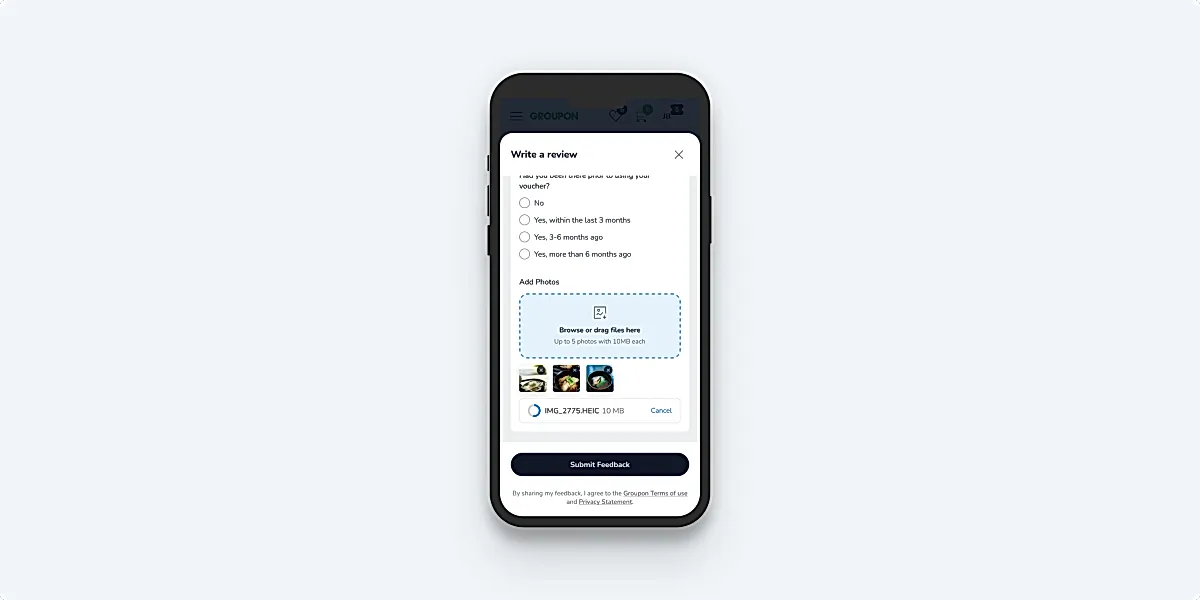
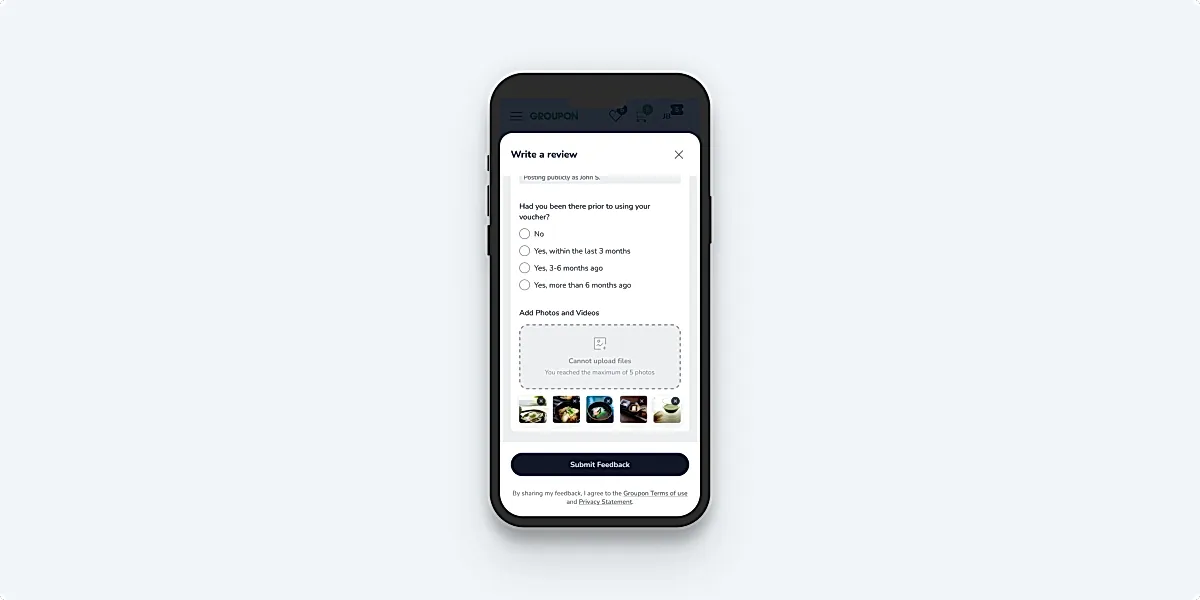
The new design created a smoother, more expressive way for customers to share their experiences. They could now rate, write, and add photos with ease, whether they were using the app or web. Prompts were better timed, interactions felt familiar, and the entire experience supported the behaviours we wanted to encourage.
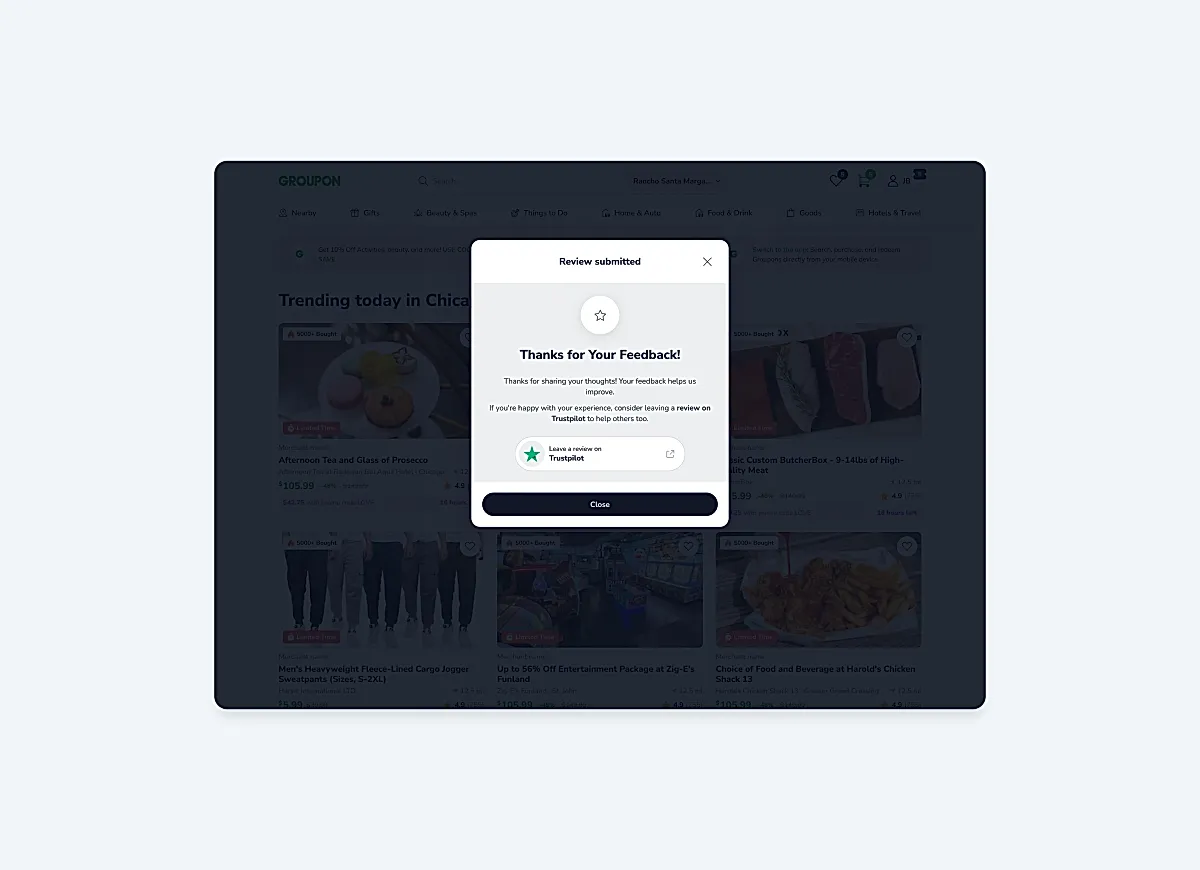
The impact was clear in the weeks following launch. Without sharing specifics, review participation strengthened, photo contributions grew, and users were completing more of the flow end to end. The quality of marketplace signals improved, merchants gained richer insight, and customers had more social proof to guide their decisions.
Takeaways #
What began as “fix the review form” became a deeper transformation of how trust is built and reinforced across the platform. This project underscored something I keep returning to: design isn’t just about improving a screen. It’s about shaping the behaviors and systems that sustain long-term credibility in a marketplace. And when done right, the value compounds.
- Previous: 62 years of nuclear testing
- Next: Monetization for community developers